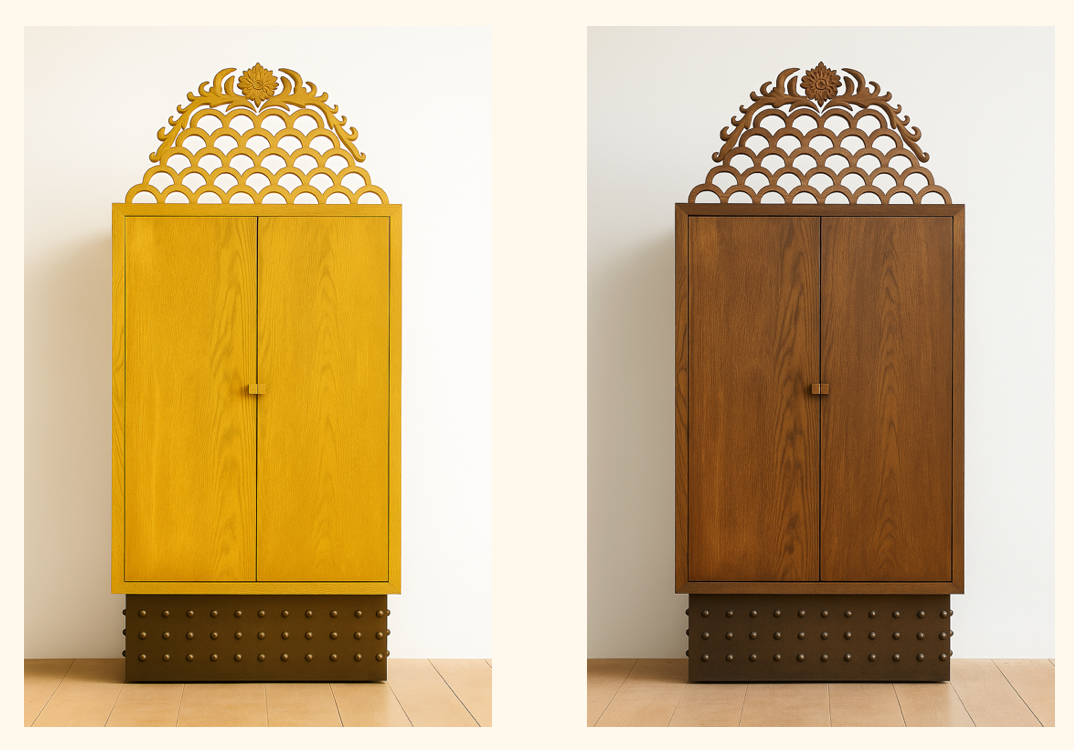
This furniture piece is conceived as more than storage, it is a vessel of memory, a quiet companion to place and tradition.
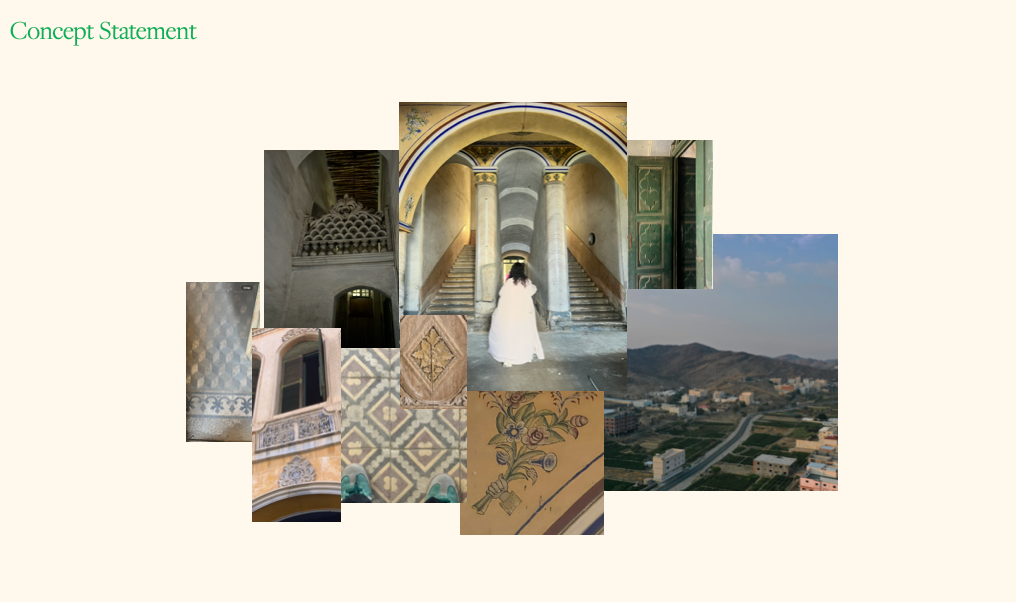
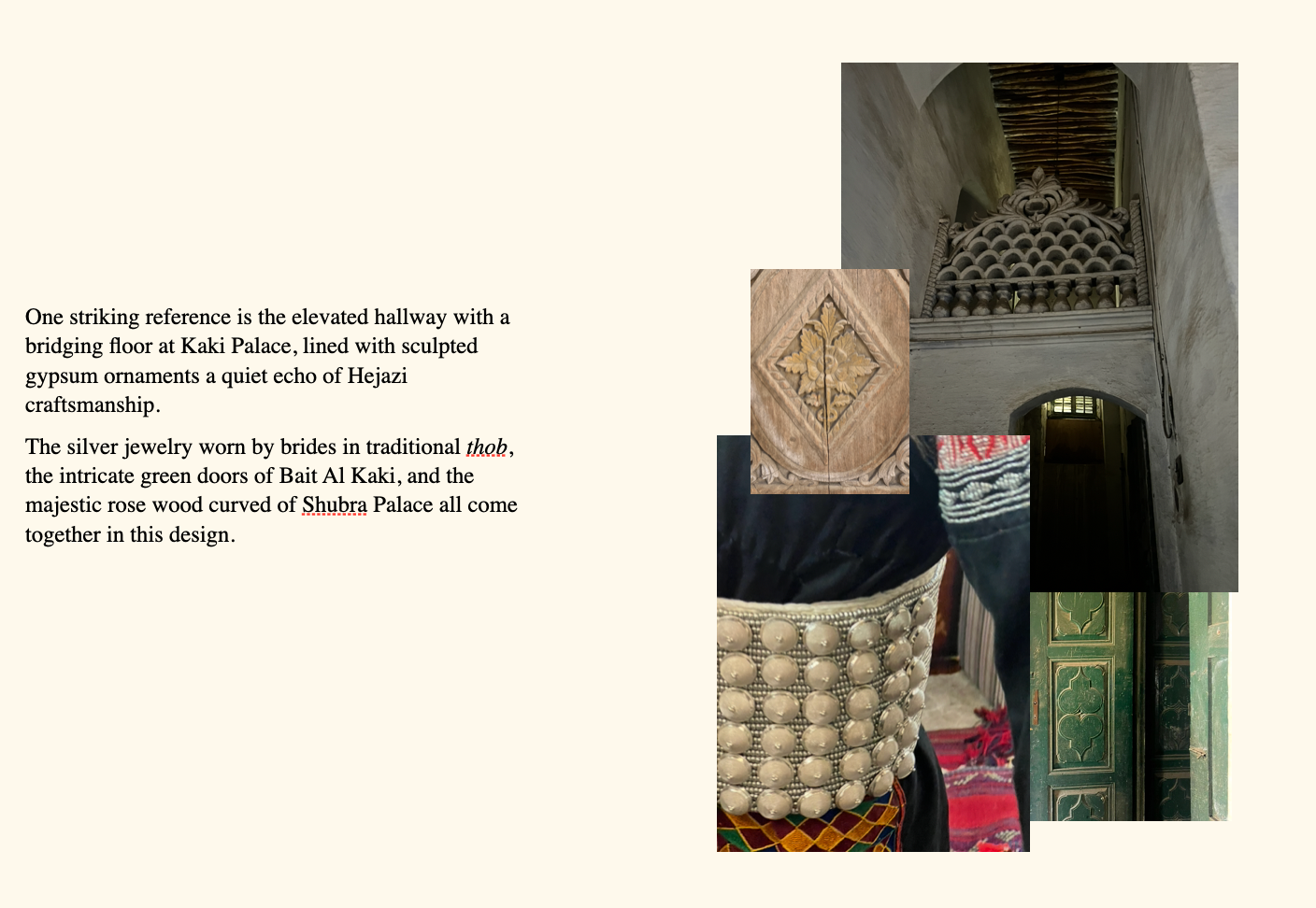
Rooted in the layered cultural heritage of Taif, Saudi Arabia, the cabinet draws inspiration from the architectural legacy of Bait Al Katib, Kaki Palace, and Shubra Palace. Each of these homes reflects a dialogue of ornament, color, and spatial rhythm. One key reference is the elevated hallway with its bridging floor in Kaki Palace, bordered by sculpted gypsum ornaments that echo the refinement of Hejazi craftsmanship.
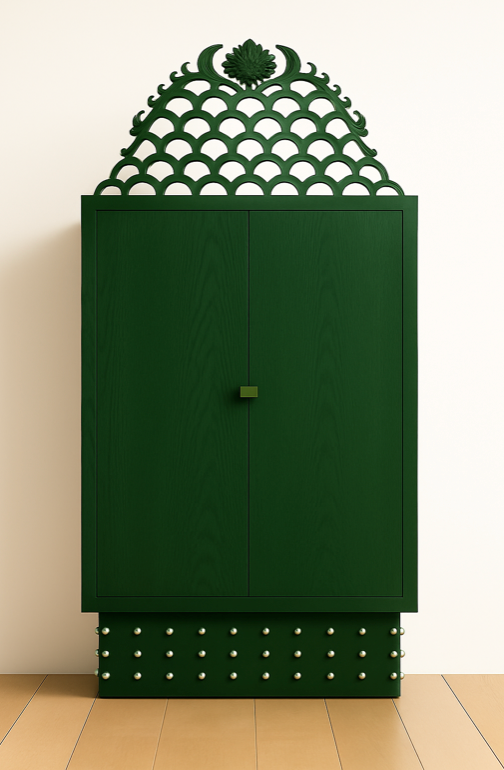
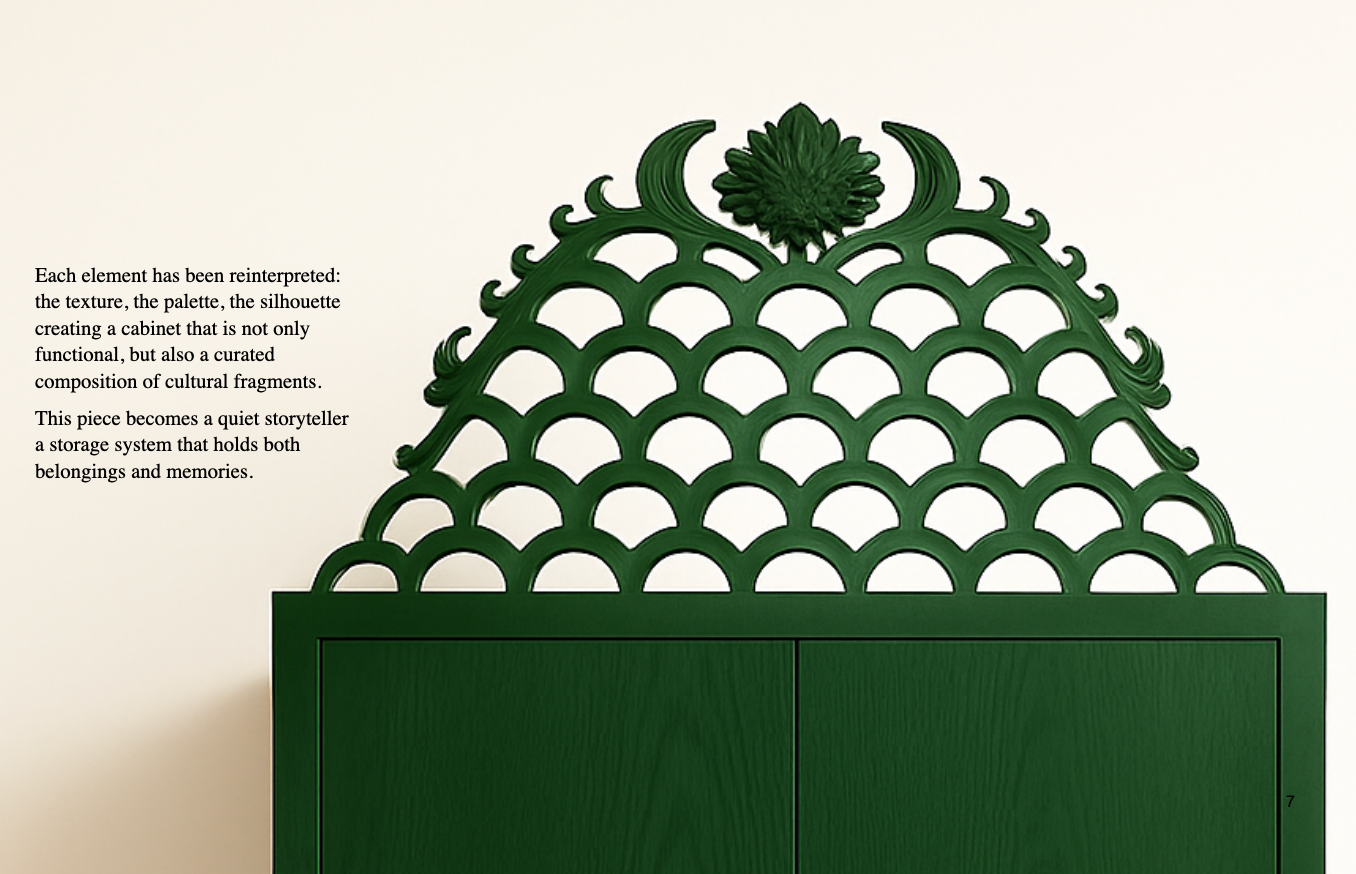
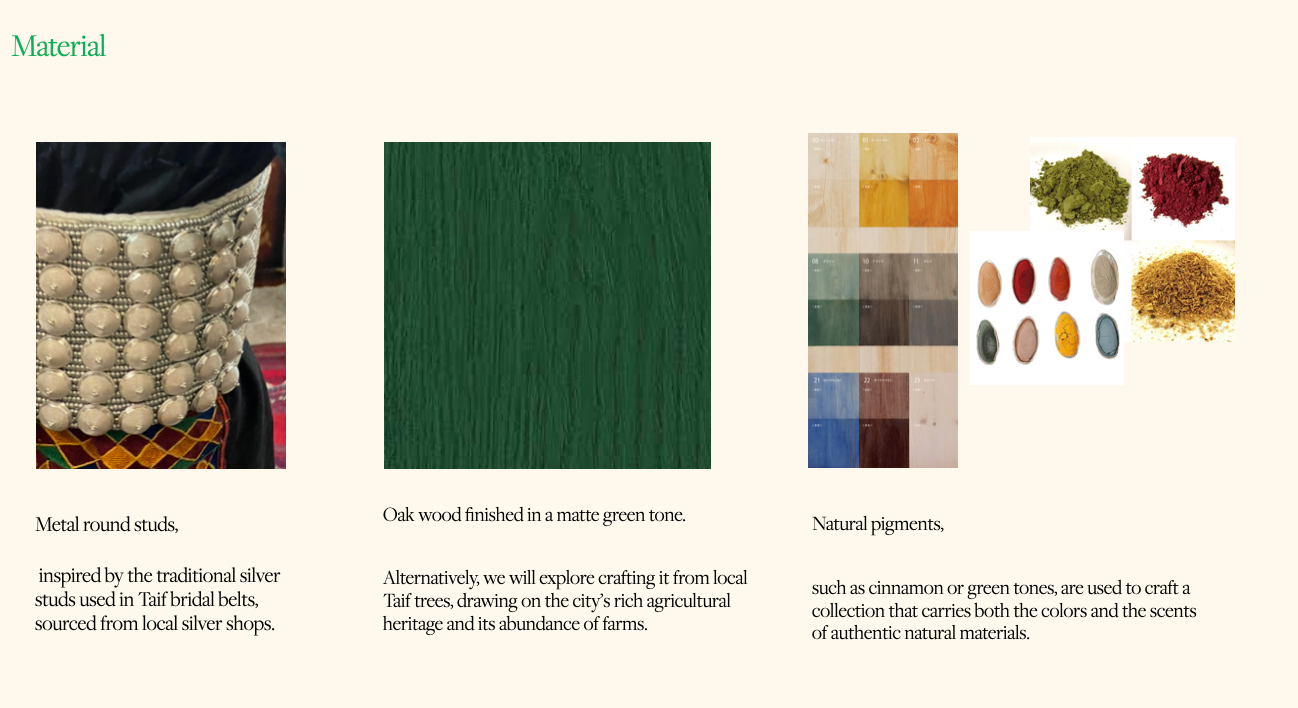
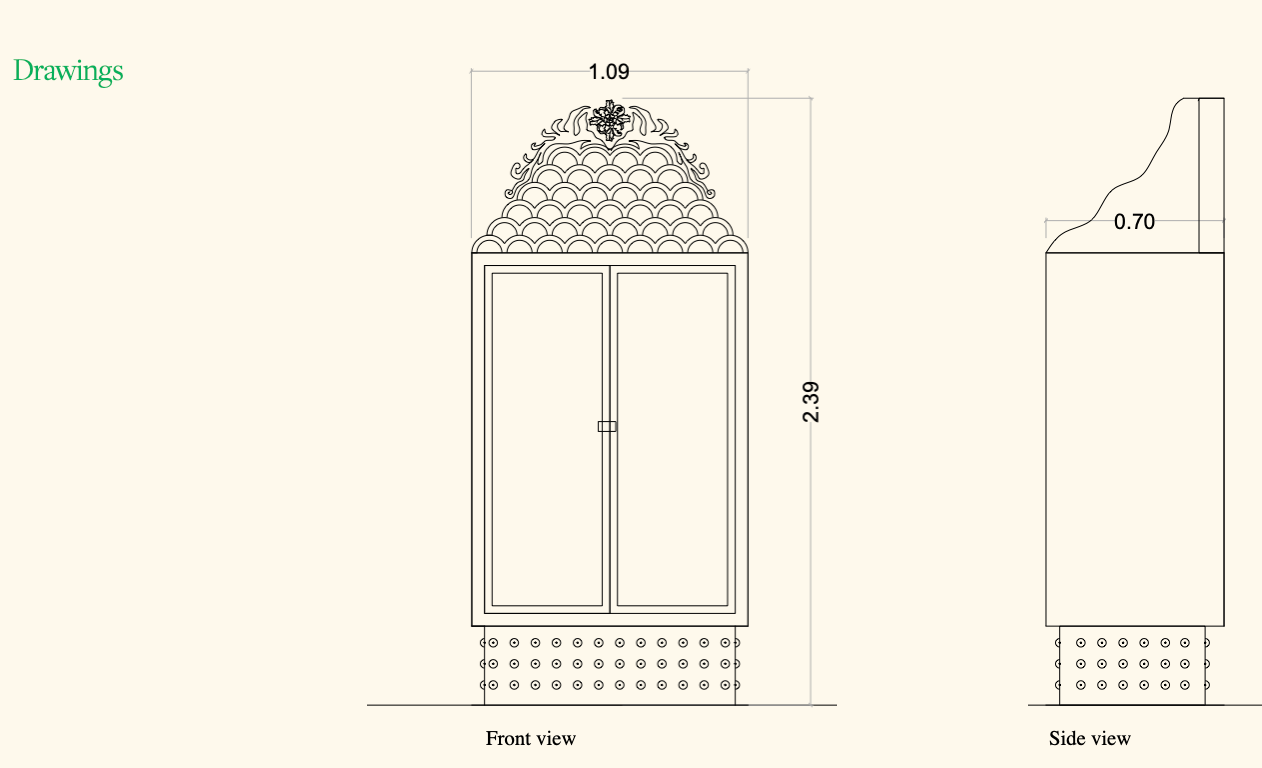
The design reinterprets these cultural fragments into a functional and contemporary form. The silver studs recall the jewelry worn by brides in traditional thob attire, sourced from Taif’s local silver markets. The green matte finish on oak wood evokes the vibrant doors of Bait Al Kaki, while the subtle curved lines honor the majestic rosewood details of Shubra Palace. Each element has been translated into texture, palette, and silhouette, resulting in a cabinet that carries both elegance and meaning.
Functionally, the cabinet operates as a storage system, but symbolically, it serves as a storyteller. It preserves belongings while embodying layers of cultural memory, inviting users to engage with the past in their daily lives. The material choice strengthens this narrative: oak wood finished in green, or alternatively crafted from local Taif trees, paying homage to the city’s agricultural abundance and farming traditions.
This piece, therefore, bridges heritage and contemporary living a curated composition of memory, craftsmanship, and place, where design becomes both functional and poetic.